Office Clearance in Beckenham

Office clearance in Beckenham should feel orderly, discreet and properly managed from the first enquiry through to the final sweep-through. We handle the removal of unwanted office furniture, archived paperwork, everyday fixtures and mixed workplace items so that businesses can reclaim space without having to coordinate the move themselves. Whether a site is being refreshed, reduced, reconfigured or fully vacated, the aim is the same: a clear, workable space and a straightforward next step.
Our office clearance service is suited to workplaces with desks, chairs, cabinets, shelving, reception fittings and assorted stored items that have built up over time. We also support larger clear-outs where an office must be emptied in stages, along with smaller jobs such as one room, a single floor or selected surplus items. If you are comparing options, pricing and quotes can be a sensible place to look before you request a tailored estimate.
Beckenham customers often want a service that balances speed with care, especially where access is shared, items are still in use, or a building has a fixed handover date. We plan around the layout that is actually present, separate reusable items where appropriate, and remove the rest efficiently. When you are ready, you can request a quotation and outline what needs clearing.
Clearance for offices, workspaces and back rooms
Every office has a different mix of items, and a sensible clearance starts with identifying what stays, what leaves and what may need to be moved in sequence rather than all at once. Some premises only need a few redundant desks removed after a layout change, while others hold reception units, filing cabinets, meeting tables, monitors, pedestal drawers and loose stored items across several rooms. We can work from a brief list or a fuller inventory, depending on how much is being removed and how the building is used.
For businesses that are reorganising rather than closing, the best clearance plan usually keeps disruption low by focusing on non-essential furniture first. That can include surplus seating, damaged office storage, broken equipment casings and items that no longer match the updated working setup. If you have a changeover period, it can help to separate the clearance into practical phases so that the active parts of the workplace remain usable while the redundant items are taken away.
Common office items handled in this kind of work include:
- desks, chairs and meeting tables
- filing cabinets, cupboards and shelving
- pedestal units, reception furniture and soft seating
- boxed archives, loose stock and general office clutter
- obsolete fittings and mixed items awaiting disposal
Furniture removal with practical handling

Much of an office clearance comes down to furniture movement, and that part deserves careful handling rather than a rushed lift-and-go approach. Office furniture can be bulky, awkward and difficult to turn through narrow corridors, shared entrances or stairwells. We remove items in a way that suits the site layout, reducing unnecessary disturbance and keeping the route out of the building as tidy as possible. That matters whether the job involves a few chairs or a long row of desks and cabinets.
Our furniture clearance page covers the kind of items commonly associated with office rooms as well as other bulky pieces that may be present in commercial premises. Where items are no longer suitable for further use, they are separated for disposal routes that fit the nature of the load. When there is a mixture of reusable, damaged and obsolete furniture, it is often easier to sort the clear-out by type rather than treat every object the same way.
Some customers also need to remove items from adjacent spaces such as storage rooms, staff areas or small meeting rooms that have accumulated spare furniture over time. In those cases, the goal is not just to empty one office but to make sure the whole working area is coherent again. A clear plan for furniture removal helps avoid moving items twice, and it also makes it easier to leave behind anything that is still needed.
Files, equipment and mixed contents
Office clearance is rarely limited to furniture alone. Many sites also contain old computer towers, printers, monitors, stationery, box files, branded displays and miscellaneous contents that do not belong in a standard furniture-only removal. Some of these items are straightforward to lift and separate, while others need a little more sorting because they have been stored together for months or years. A practical clearance takes account of that mix and works through it methodically.
Our waste removal service is relevant where an office has general accumulated material alongside the main furniture items, such as packaging, broken fittings, incidental rubbish and other non-specific loads. If the contents include older archives or confidential material, it is wise to decide in advance what should remain on site and what can be removed as part of the clearance. That makes the job more organised and helps the removal team handle each category appropriately.
Where possible, we keep the process calm and structured so that a workspace does not become harder to use while the clearance is under way. A single room may be simple, but a larger office can benefit from dividing the contents into sections, such as furniture, paper records, equipment and loose items. That small amount of sorting often saves time later and supports a better final result.
Supporting business changes and site handovers
An office clearance can sit within a wider business change, including refurbishment, downsizing, relocation or the handover of a lease. In those situations, the main task is not simply removal but making sure the site can move cleanly to its next stage. That may mean clearing reception areas before work begins, emptying storage first, or removing fitted and freestanding items in a sequence that follows the rest of the schedule. The right approach depends on the building and the order in which spaces need to be released.
Our business waste removal page is useful for customers who need a broader service beyond a single room or one-off office contents. Some projects involve a mixture of presentable furniture, worn fittings and everyday business waste that has built up during normal operations. In those cases, it is helpful to separate what is being taken as part of the office clearance from what belongs to the wider waste stream, so the work stays clear and manageable.
For a handover job, the final result usually matters more than the individual items removed. A landlord or incoming occupier will want a clean, empty and accessible space, and the office team will want confidence that the agreed contents have been taken away. The best way to support that is to keep the scope simple, avoid confusion about what remains, and let the clearance follow the real condition of the premises.
Storage rooms, cupboards and overlooked spaces

Office clearances often become more involved in the spaces people forget to check first. Cupboards, under-desk areas, archive corners, staff rooms and internal storage spaces may contain boxes, stationery, broken monitors, old binders or spare equipment that has slowly accumulated. These are the parts of a site where clutter tends to hide, so a thorough clearance usually benefits from looking beyond the main workstations and into the secondary spaces as well.
Our flat clearance and related property-emptying services can be useful when an office sits within a mixed-use building or when a business has contents spread across more than one kind of room. Not every project is identical, and some occupiers need the same careful removal approach across office rooms, storage cupboards and compact annex spaces. A tailored clearance helps keep those different areas in one coherent plan rather than treating them as unrelated jobs.
When the layout includes narrow access or compact storage, it is often best to remove items in the order that creates the most room for the next step. That may mean taking larger pieces first, then following with boxed contents and smaller loose items. A measured approach is usually better than forcing everything out together, particularly where corridors, lifts or shared entrances are involved. Methodical work keeps the job safer and less disruptive.
How office clearance is usually organised
Planning a clearance is easier when the main categories are clear from the outset. In many cases, the process starts with identifying the rooms to be cleared, noting any items that must stay, and deciding whether the work should happen all at once or in stages. The more orderly the starting point, the easier it is to avoid delays during removal. A straightforward list of contents is often enough for a sensible quotation, especially when the premises are not large.
If you are collecting details for a quote, it helps to note the main items, the number of rooms involved, the access available and whether there are any awkward pieces that need extra care. You do not need to overcomplicate the request, but a clear summary makes it easier to scope the work accurately. Good information at the start tends to lead to a smoother clearance later, particularly where the job includes bulky or mixed contents.
For office clear-outs, these are the details that usually matter most: the type of furniture, the approximate volume, whether access is level or shared, and whether there are any items that need to remain in place. If that sounds like the stage you are at, a brief enquiry is enough to begin. You can then compare the outline with the actual site and decide on the next step.
About Beckenham
Beckenham is a town in the London Borough of Bromley, in south-east London, with a history that reflects its shift from a rural settlement to a suburban centre served by rail links and tram connections. Its character has been shaped by late Victorian and Edwardian development, and the town still contains a mixture of period homes, local shopping streets and civic spaces that show that layered growth. Beckenham High Street remains a key commercial corridor, while the surrounding roads include a range of residential architecture that ranges from older terraces to later interwar and post-war buildings. The town centre is anchored by public green space, including Kelsey Park, which provides a notable parkland setting with lakes, paths and mature planting. Another important open space is Croydon Road Recreation Ground, which adds to the borough’s network of sports and leisure areas. Beckenham also has strong rail connections through stations such as Beckenham Junction and Clock House, and the tram link gives it a further transport connection across the wider area. Cultural life is supported by local venues, churches, schools and community facilities, and the town’s urban form reflects its role as a settled suburban district rather than a dense central commercial hub. Historical associations include the presence of Beckenham Place Park, a large estate landscape that has been adapted for public use, and the area’s wider significance in the growth of suburban London. The result is a place with a recognisable town centre, varied streetscapes and several well-used public spaces that continue to shape daily life.
Recycling choices and item sorting
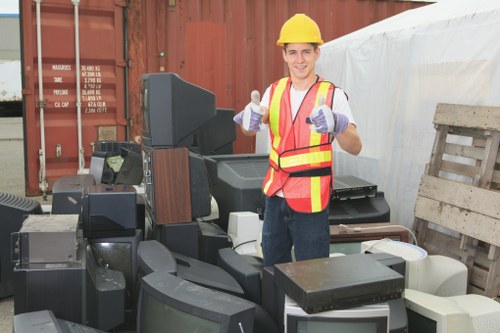
Not every office item belongs in the same part of the removal process, which is why sorting can matter as much as lifting. Furniture, mixed waste, paper-heavy contents and obsolete equipment all have different practical characteristics. When an office is being cleared, it is often sensible to separate those groups early so that the job moves in a calm order and useful items are not mixed with material that needs a different handling route. That approach is especially helpful in workplaces with varied storage.
Our recycling and sustainability page may be of interest to customers who want to understand how recoverable materials are treated within the wider clearance process. If an office contains reusable furniture, metal-framed items, separated paper records or other identifiable material streams, it is usually easier to manage them when they are not all bundled together. A little thought at the outset helps the clearance stay tidy and proportionate.
We keep the focus on practical outcomes rather than complicated claims. The main objective is to remove what no longer serves the workplace, while handling the contents in a way that suits their type and condition. In real terms, that means fewer unnecessary lifts, less confusion at the point of collection and a clearer space once the job is complete.
When you want a tailored quotation
Office clearance pricing usually depends on the volume of items, the type of contents, the ease of access and whether the work can be completed in one visit or needs to be phased. A compact room with a few surplus items is very different from a multi-room office with cabinets, archived files and bulky furniture, so a tailored quote is usually more useful than a generic estimate. It also helps to know whether you are clearing a full workspace or only selected areas.
For a clearer quotation, it is often enough to send a short description of the rooms involved and the main items to be removed. If you have photographs or a simple inventory, those can help explain the layout, but they are not the only way to start. Once the scope is understood, we can match the work to the right approach and avoid unnecessary back-and-forth. If you are ready to move ahead, contact us for a quotation.
Some customers begin by comparing pages for the most relevant service, then move to the quotation stage when the contents are clear. If that is your situation, the most useful next step is to note what needs clearing, how soon it needs to happen and whether any items must remain on site. From there, the enquiry can be kept short and focused, which is usually the easiest way to get started.
Related clearance options

Some office projects overlap with other types of property clearance, especially when stored items, furniture and mixed household-style contents appear in the same building. In those cases, it can help to compare the main office service with more specific options so the job is matched to the premises rather than squeezed into the wrong category. The aim is always to keep the work aligned with the actual contents and the layout you have in front of you.
We also offer home clearance, house clearance, garage clearance, loft clearance, garden clearance, furniture disposal and builders waste clearance where those services are a better fit for the property and the type of items involved. These pages can be useful if your enquiry includes more than one setting or if the clearance extends beyond standard office furniture and contents.
The simplest way to proceed is to identify the main space, the type of items and the end result you need. From there, the right service path becomes clearer, and the quotation process can focus on the actual work rather than on assumptions. If office space is still the main concern, start with the office clearance and build from there.